Building a suspension bridge in Minecraft
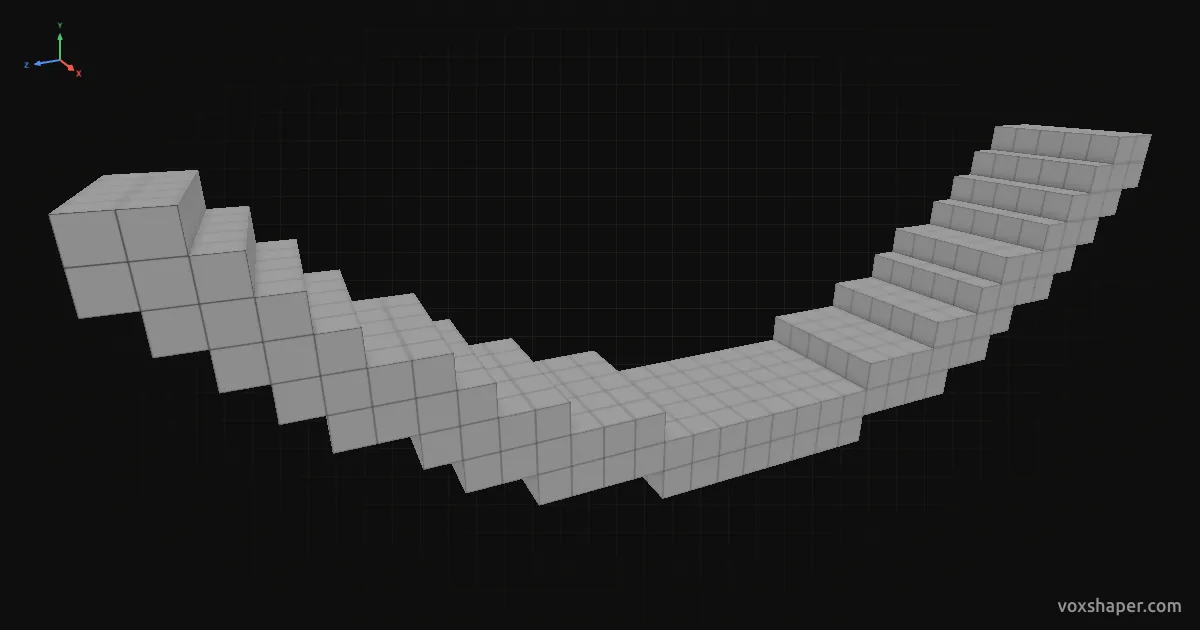
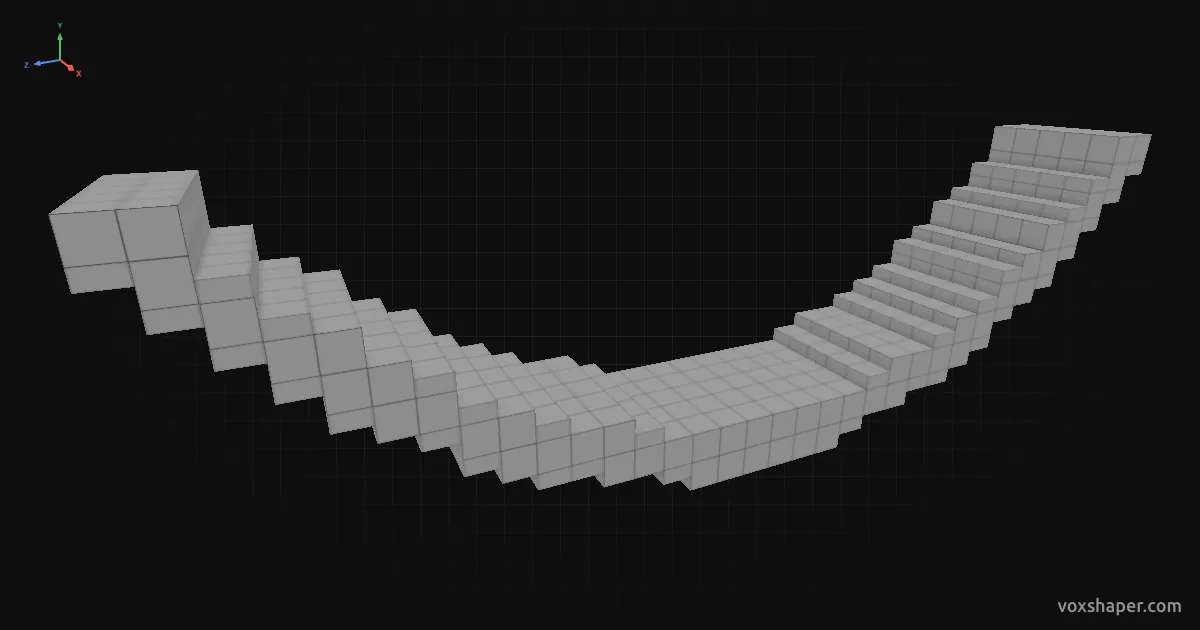
A rope hanging between two points follows a catenary. The curve looks like a parabola, but it drops more steeply at the ends and lies flatter in the middle. That is what makes a suspension bridge look right. It is hard to hit by hand because every column has a different height. VoxShaper works it out for any span and shows you every layer.
Span and sag
Span counts the blocks from one anchor to the other, both ends included. Sag is how far the rope drops below the straight line between its ends. A small value gives a taut cable, a large one a heavy chain. For the main cable of a suspension bridge, about a quarter of the span looks right.
Height difference hangs one end higher than the other, between two towers of unequal height or from a cliff down into a valley. The lowest point then moves towards the lower end.
Rope, deck or roof
Width and thickness turn the line into a solid. One block wide and thick, it is a rope or a chain. More width makes the deck of a suspension bridge or a sagging tent roof, more thickness a sturdy beam. The thickness stays the same along the whole curve, even at the steep ends. For a stone bridge on arches, use the arch bridge.
Standing up as an arch
Turned upside down, the same curve carries itself: a catenary arch passes its weight into the ground without pushing sideways. The Gateway Arch in St. Louis and many of Gaudí’s arches are built this way. The switch “Stand up as an arch” flips the chain, and the sag becomes the rise.
Slabs and stairs
Built from full blocks, the curve climbs a whole block at a time. With slabs it moves in half steps, so a bridge deck can be walked without jumping. Either way the curve has no gaps.
Build or export
Rebuild the catenary layer by layer or download it as a schematic for Litematica, WorldEdit or the Structure Block.